susi.ee   EST | ENG | RUS | FIN


Main page
Special Offers
The Hotel
Bookings
Catering
Conference
Beauty Parlor
Sauna
Loyal customer
Contact
Company
Office Building
St. George\'s Night Park
Partners
 
 
St.George´s Night park
 
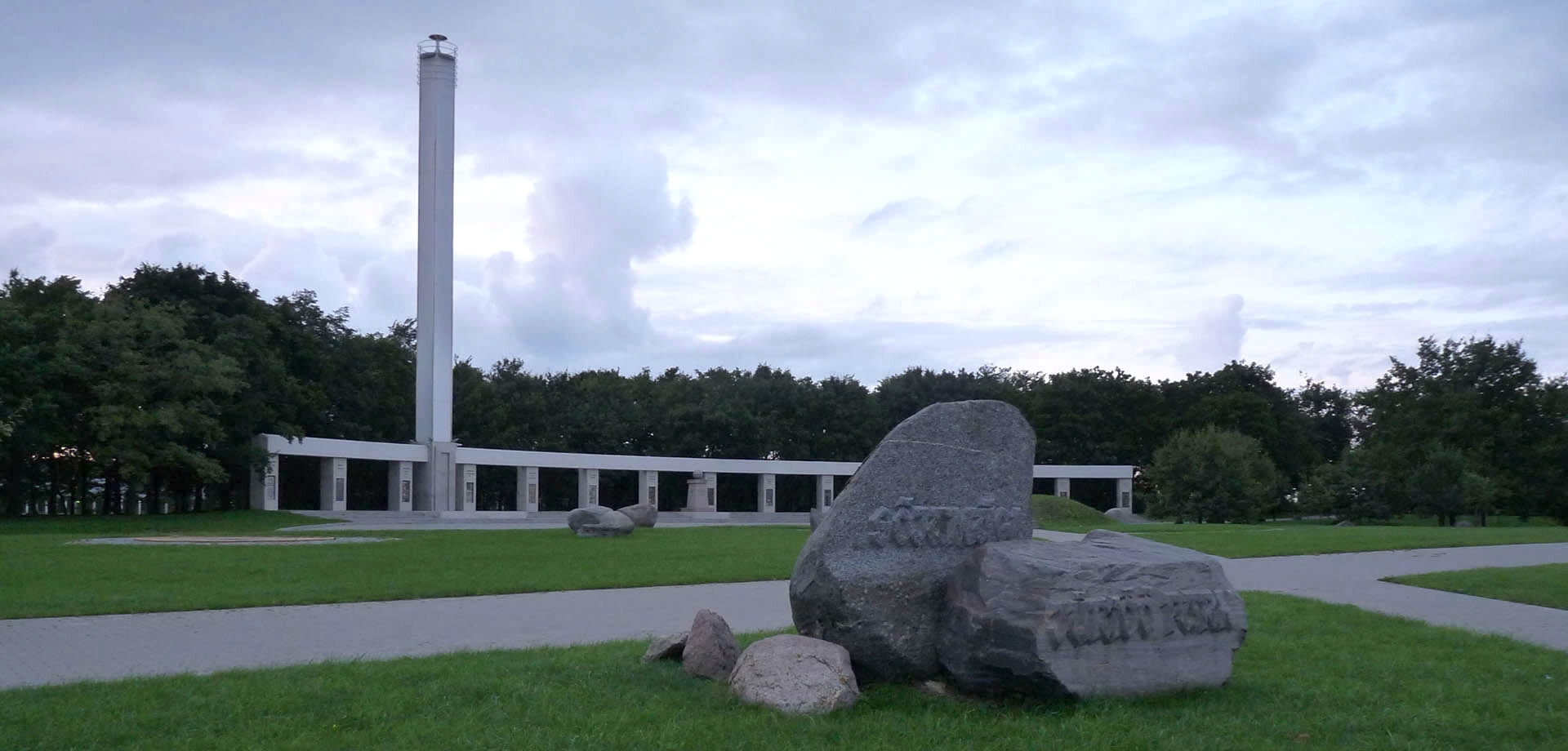
1.gifSt.George´s Night park was founded in the highest region of Tallinn, on the ridge of Sõjamäe (War Hill), 55 metres above sea level. The name of the region by itself refers to the bloody historical events that once took place in this area.

RENNER – HOENEKE CHRONICLE SPECIFIES:

On 14 May 1343, a decisive battle was fought on the grounds of the now Jüriöö Park between the mail-clad knights of the master of the Livonian order, Von Dreileben, and the Estonian troops. Although this battle took the lives of 3,000 Estonians – again according to the chronicle – the Jüriöö uprising as well as the War of Independence later proved that Estonians were not in any way different from other European nations. And thus the desire for freedom has been very close to the Estonian soul throughout the history.

HISTORY

The rise of national self-consciousness always involves increased interest towards the history of the country, paying respect to the heroes who have fought for the freedom of the people and taking more care of the local surroundings.

1930ies

3.gifAll these views were very clearly reflected in the 1930ies’ decision to plant an oak grove on the War Hill, the final completion of which was timed for the festivities celebrating the 600th anniversary of the Jüriöö uprising and the 25th anniversary of the Republic of Estonia in 1943.
Architect Joh. Ostrat’s design won the design contest announced by the War Hill Decoration Committee formed for founding the grove, and the general layout of the War Hill Grove based on Ostrat’s design was officially approved in March 1936.
Covering the limestone surface of the War Hill with greenery was not an easy task. For this purpose, 100 holes had to be bored into the surface of the hill and both vertical and horizontal cracks created with explosives. 4,200 cubic metres of soil were brought to the War Hill from a nearby moor and 1,200 metres of ditches and drains were dug.
Joh. Ostrat’s design foresaw a sacrificial fireplace as the centre of the War Hill Grove, with an eternally burning fire for holding festive garland-laying ceremonies and other important events. The plans included a horseshoe-shaped clearing nearby for 18,000 people, as well as a cemetery for national heroes. All these different sections were to be surrounded by a forest with conifers on the outer edge and broadleaf trees inside.
For instance, 3,000 firs and 200 broadleaf trees were planted on the hill in spring 1936, with 30-40 workers taking care of the planting. In May 1936, the first officially dedicated oak trees were planted in the War Hill Grove; a year later, there were already 22 of them.
Among other distinguished governmental and public officials dedicated oaks were also planted for the Head of State, Konstantin Päts, Commander-in-Chief, Johan Laidoner, the former Head of State, Jaan Tõnisson, etc.
Due to various other urgent works the planting activities on the War Hill stopped before 1940 and the completed areas were destroyed in the war that followed.

THE SOVIET OCCUPATION

4_1.gifIn the 1950ies, a lot of non-descript industrial buildings were erected in the vicinity of the War Hill. The new Leningrad Road was designed so that it cut through the originally planned grove. According to an article in „Õhtuleht” from 24 October 1960, there was only one 5-metre oak left on the War Hill by that stage.
The domestic history research club of Tallinn City Museum started to fix this dismal situation in the second half of the 1960ies. The initiator of the project was Karl Laane, a merited domestic history researcher, working on the planting team at the time.
The cleaning of the territory alone required a lot of hard work. Planting trees on the limestone surface was even more complicated. Besides, the planted trees needed constant care.
The domestic history researchers not only created a small park on the War Hill, but also deferred the plans for industrial expansion.

1995

During the years of the Soviet occupation, even most people in Tallinn did not know to link the War Hill by the St. Petersburg Road with the historical Jüriöö uprising.
The re-realisation of the idea brought up again in connection with Estonia re-gaining its independence to create a memorial park for freedom fighters was accomplished on Jüripäev, 23 April 1995, on the 652nd anniversary of the Jüriöö uprising, when Jüri Uppin, hotelier and owner of AS Susi, organised an optimistic and laid-back public party on the War Hill, with the festivities climaxing with a ceremonial planting of young oaks – future grove trees – and lighting a bonfire.

In today’s Jüriöö Park there are memorials to celebrate and commemorate the most important stages in the history of our country. A sword struck halfway into the ground symbolizes the Jüriöö uprising, and there is also a memorial stone to the Fighters in the Estonian War of Independence, and a monument to All Estonians in World War II.
The following events have become traditional in Jüriöö Park:

  • Anniversary of the Tartu Peace Treaty on 2 February
  • garlands and flowers are laid at the War of Independence monument and speeches are made on historical events and their importance for the Republic of Estonia.
  • Anniversary of the Republic of Estonia on 24 February
  • A bonfire for freedom is lit, patriotic speeches are made, a reception for veterans and guests is held. This is an opportunity to be part of the anniversary celebrations for those who could not participate in the events on Freedom Square, in St. John’s Church, Theatre Estonia, and other invitation-only events.
  • Jüripäev on 23 April
  • A bonfire is lit from the torch lit by the Mayor on Town Hall Square and taken to the Jüriöö Park by horsemen; patriotic speeches are made, ancestors are honored, a festive reception for guests is held. To honour Jüripäev, Defence League shooting contests are held, with the best troop and the best junior team receiving the Jüriöö Challenge Cup. Celebrating Jüripäev is the most important Heritage Conservation Month event, which is also linked to the traditional Lasnamäe District festivities.
  • Victory Day on 24 June, people gather in the park to wait for the arrival of the fire. A bonfire for freedom is lit from the victory fire dispatched by the President, speeches are made, torches are sent to other Tallinn districts and midsummer bonfires are lit with these torches in the evening. All citizens can get a victory torch to light their midsummer bonfires. The fire is carried from Jüriöö Park to the Army Cemetery and ends up at the Tallinn Upper Secondary School for Sciences. At the end of the celebration people can have a taste of soldiers’ soup and ale.
  • Commemoration of ancestors, heroes and the New Year’s Eve on 31 December
  • A fire is lit in the park, recollections are made of the past, and respects paid to the ancestors. People recall what has been completed during the year and say goodbye to the old year.
At major events, the army orchestra plays and guards of honour are lined up, and the bonfire of freedom is lit along with gun salutes.
Following the plans laid out during the first Republic, the tradition of planting oaks has also been re-established in addition to other festivities and plans are made to restart army parades in Jüriöö Park.

New traditions have also been introduced: the badge of honour “Jüriöö Star”, awarded to people who have contributed to the development of Jüriöö Park and to the promotion of patriotic ideas. In addition, Jüriöö Park challenge trophies have been established for the best shooters and the junior shooters participating in the shooting contest of the Defence League.
 
 
meediadisain.com